Yesterday at the garden store, I was tempted by the racks and racks of seeds but I resisted purchasing any because I really had NO IDEA what kinds of seeds we already had. Today — another rainy day — I decided to find out.
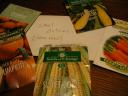 Our seed “bank” perhaps isn’t a personal triumph but at least it keeps all the packets relatively organized and together in once spot. We store our left over seeds in a zip seal plastic bag to minimize fluctuations in humidity and in our unheated basement to minimize fluctuations in temperature. You could also keep them in your fridge. Ideally the seeds should be protected from light as well.
I’ve heard that seeds lose about 10% of their germination ability every year which means that 9 or 10 year old seed is, ah, dust. But it also means that you can use seed that’s a couple years old, if you sow it thicker in proportion to how old it is. For instance, I have some three year old bean seed that I’m going to plant but I’m going to use roughly twice as many seeds per hill than I would if the seed was fresh. I figure I can always thin the seedlings if too many sprout but I’d be out of luck if nothing sprouted.
Some folks buy all new seed every year. As a kid, I remember every January when the seed catalogs started to come in. It was fun to start planning what kind of a garden we’d wanted, sketching it out, changing our minds. It was hours of fun, really. We’d carefully choose our seeds and place our order. I miss that experience and I haven’t been able to replicate it exactly as an adult. I’ve got a pretty small yard so I rarely use all the seeds in a packet and it seems a shame to throw them away since they don’t entirely lose their magic over the winter, or even over several winters. It’s your choice, of course.
I must admit though that once the garden gets underway outside, I tend to forget about seeds so I need to make it as easy as I can on myself to grab what I need and go. For organization, my seed bank has several business sized envelopes labeled:
- “Start Early Indoors” — for peppers, tomatoes, eggplant…
- “Start Early Outside” — for beans, peas…
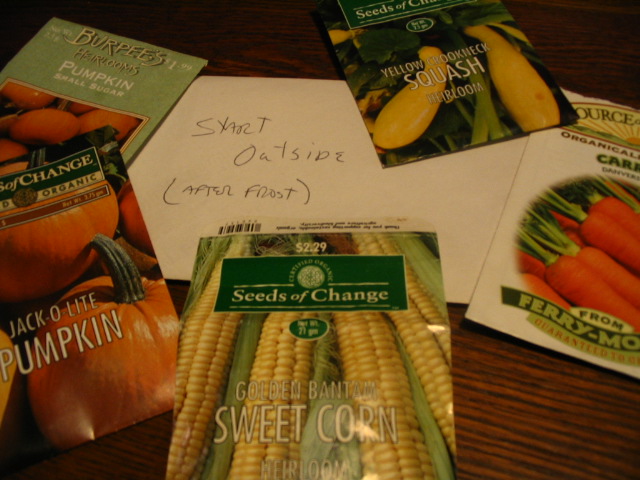
- “Start Outside (After Frost)” — squash, pumpkin, sweet corn, carrots…
- “Start Mid-Season Indoors” — mostly perennials like herbs…
- “Mid Season Replacements” — beets, radishes…
To be honest, it’s been a couple years since I started many seedlings inside, so the “Start Early Indoors” envelope is empty. I still have all the necessities to start seedlings but mostly, I buy plants from the folks at the farmers’ market. The farmers’ market near us has fantastic variety and quality of seedlings in the spring… and it so happens it’s within walking distance. If I didn’t have access to a farmers’ market or if the one nearby didn’t have such an unbelievable variety, I’d crank out my grow-lights in a heart beat. I still will sprout perennials like herbs but again I feel strange buying a whole packet of seed when I really only need one or two plants. And wouldn’t you know it, the local farmer’s market also has a wonderful selection of herb plants. So my “Start Mid-Season Indoors” envelope is also currently empty. If for some reason all my herbs died though, I’d probably start sprouting them myself just as I did originally since it would be a little pricey to buy plants to replace my oregano and thyme and lavender…
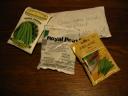 We’ve also experimented a bit with saving seed so we’ve got business sized envelopes of garlic chives and green bean seed. I’ve also got a bushel basket of sunflower heads and a paper bag full of moonflower pods in the garage. Some folks save tomato seeds, especially of “heirloom” varieties but since I don’t sprout my own tomatoes anymore I don’t. (If a tomato seed “volunteers” and sprouts up in the middle of the garden, I usually find a place for it, though.) One kind of seed, I think you really should NOT bother saving are any of the squash or pumpkin family. My experience at least is that these tend to cross pollinate in the garden and the seed that results seems to be the worst characteristics of both parents. If you save seed, any seed, BE SURE TO MARK THE YEAR on the envelope.
So what our final decision? We have enough seed for this year so we won’t buy any more seed. But we also decided to discard any seed older than three years. And at the end of this season, we’ll discard ALL the seed so we can start fresh next year.
Maybe I can look forward to those seed catalogs…
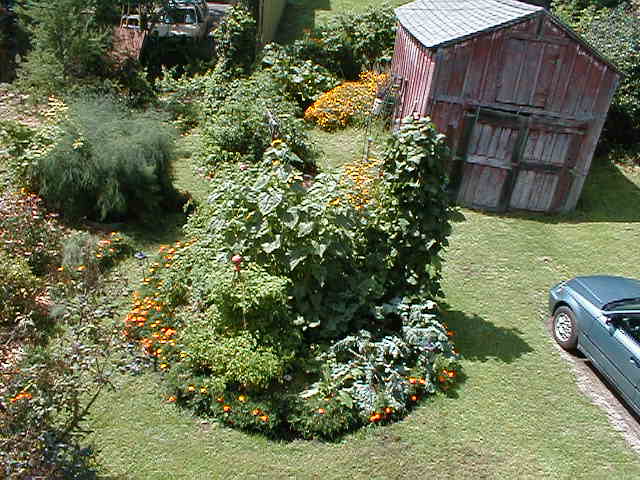 Someone said, “Plant one seed and you become a gardener.” That’s been my experience of gardening: it’s hard to stop. Success with one season spurs you on to try new things in the next. Actually, so does failure. Maybe next year, you’ll prune those tomatoes at the right time or get ahead of the cucumber bugs. It’s always new and challenging.
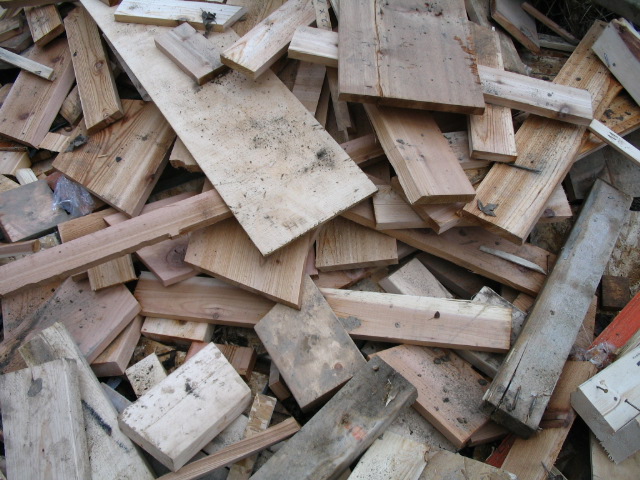
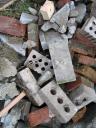 The new barn is absolutely wonderful and we needed it so badly. Our old barn, as charming as it was, proved to be nearly useless in separating “indoors” from “outdoors.” Now our tools are safe and dry.The finished project is gorgeous but we still have to deal with stuff like this:
 and this